McRae Manor

The 1960s are often dismissed as a design catastrophe, but this thoughtful collaboration by building and landscape architects proves the decade produced some excellent results. Ironically it began with “urban renewal” of the time—an 1890s mansion was obliterated. But thanks to an enlightened client and the designers’ sensitivity, McRae Manor relates well to its older single-family neighbors and demonstrates how a rental apartment complex can be a beautiful place to live.

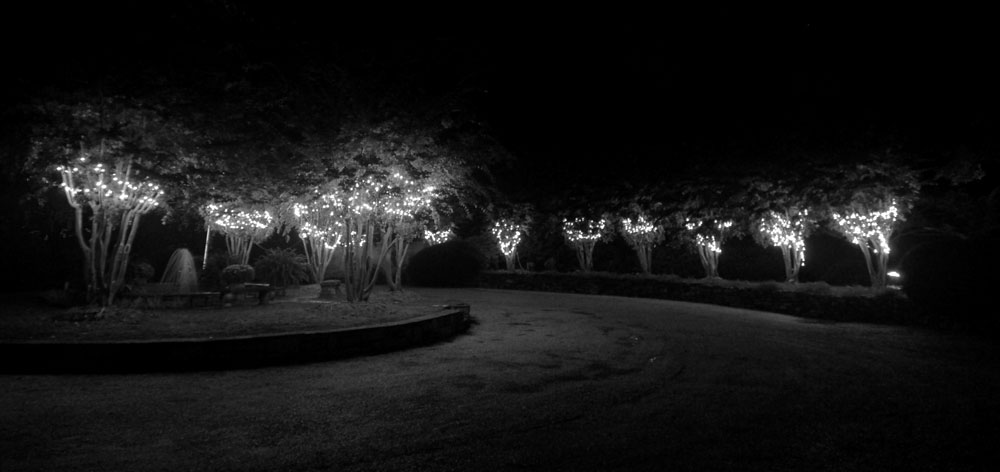
Doan Ogden earned his landscape architecture degree from Michigan State University in 1931 and relocated his practice to Asheville in 1950. For three decades he was active in North Carolina, designing the Daniel Boone Native Gardens at Boone, Asheville Botanical Gardens, and many other public and private properties. Ogden liked native flora as well as exotic species that would thrive in the mountain climate. At McRae Manor he melds native river birch, for example, with specimen Dawn Redwood and delicate Asian maple. Unlike situations where developers bring in landscape experts only after structures are decided and done, here the building architects worked from Ogden’s carefully conceived master plan. The key concept was to orient buildings inward, toward a central fountain, and to hide cars and driveways from the street and surrounding properties. The steep old driveway from Melrose Avenue was entirely eliminated, replaced by a heavily landscaped pedestrian entrance.

Sheila and Bob Bessell’s apartment with a wood-burning fireplace. Coincidentally Mr. Bessell’s father, architect Wesley Sherwood Bessell, designed in Great Neck, Long Island, the celebrated Dunstone Garden Apartments--lauded for a picturesque landscaped courtyard, fireplaces, auto garages and other features unusual for 1939.
Tryon architects Shannon Meriwether & Holland Brady used low-pitched, complex rooflines and building facades with step-backs and balconies to disguise mass. Inside, half the apartments have wood-burning fireplaces. Window sills are marble. Floors are oak. For the more than four decades since it was built McRae Manor has been well-maintained, and unsympathetic “updating” generally avoided. Thus lighting fixtures, bathroom and kitchen features, and many other details remain from the Sixties in nearly-original condition.
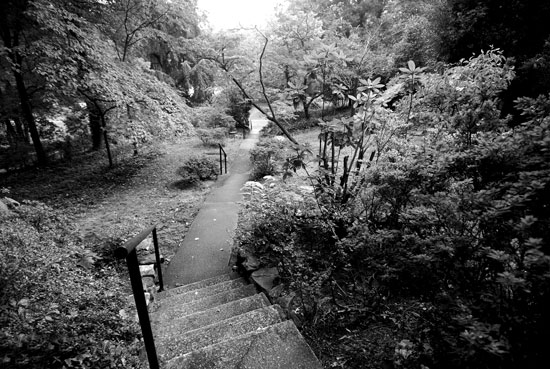
Walkway descends from courtyard to Melrose Avenue through this landscape zone, thus separating pedestrian access to the complex from the automobile access off Laurel Avenue.

Mature landscape conceived by Doan Ogden, viewed from a second-story apartment. As seen often around Tryon, white gravel is used instead of pavement for driveways. The gravel contrasts with bordering darker plantings and with low perimeter walls of undressed stone, stacked up as flats with little or no visible mortar, like classic “stone fence.” To left is glimpsed a single-family residence for the clients, designed by a Michigan architect and built a few years later in lieu of a planned multi-family building. A row of carports for the complex is hidden behind a low wall of soft brick, screened from this courtyard by dense plantings.