
Mill Farm Inn

Constructed of blue-grey granite from a Polk County quarry owned by architect Russell Walcott, this landmark evokes sturdy stone farmhouses of Provence. In 1936 Frances Williams, then living in the expatriate colony of Grasse in the south of France, purchased the old Mill Farm to build her new inn with the refined, intimate character of one she earlier had run in Cambridge, Massachusetts. It opened for business in 1939.
Tennessee-born Williams cut a wide swathe in Tryon with her walking stick and purple velvet cape. She admired Joyce, Hemingway, and D.H. Lawrence. When Lady Chatterley’s Lover was banned she mingled that book in her lingerie to slip it past U.S. Customs coming in from France. She advertised Mill Farm Inn in literary magazines, accepting people whose breeding and interests suited her.
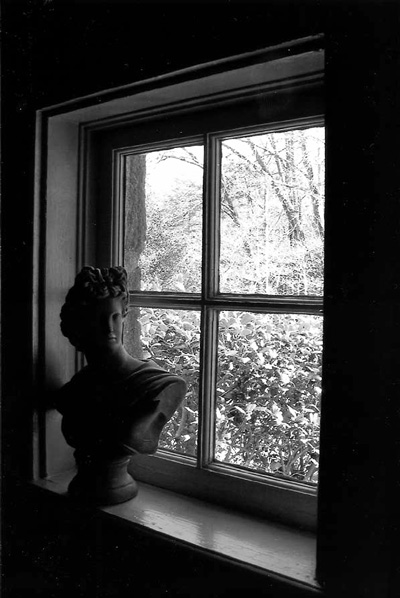
Guests typically settled in for long sojourns; one remained for thirteen years. White-gloved waiters served meals, in good weather often on the north terrace facing Pacolet River and Tryon Peak or, in winter, on the sunny south patio. The east shed, now enclosed, was an open sleeping porch for guests.
Present owners Gary Corn and James Blanton still rent out suites, remodeled with kitchenettes. The foyer, formal dining room and living room, where cosmopolites once gathered au salon, are filled with antiques and art. The property is on the National Register of Historic Places.

Stone laid in a European manner describes subtle lintels above eight-over-eight windows, while the random masonry pattern softens severe geometry of simple façades.

Beamed living room displays paintings by Lawrence Mazzanovich, Joseph Birren, John Sylvan Brown, and other old Tryon artists. Door to left of fireplace conceals wood storage.

Dining room with oils and watercolors by early Tryon artists George Aid, Amelia Watson, Fred Reich, and Louis Rowell.

Luxuriant canebrake between north lawn and Pacolet River.
Photographs by Robin Lattimore
