
The Lanier Club and its Tryon Library
In the late 19th century the new woman’s club movement burgeoned around the nation, in great cities and in smaller communities too. It was a Progressive Era phenomenon where educated women coalesced to focus on serious matters and to improve their own knowledge of world affairs, political economics, public education. Women’s suffrage and temperance reform weren’t the issues which brought these women together; in fact most of the new Woman’s Club members sought to make their movement far broader in scope. While their club events might be open to men and to other women, these club events were intended for women invited to be Club members, vetted for compatibility and teamwork skills similar to the by-invitation men’s clubs that played such a large role in American community leadership at that time. By 1910 local clubs confederating in the General Federation of Women’s Clubs counted a million members in total around the United States.
Each new Woman’s Club had its unique character. Some like Chicago Woman’s Club sought to reform government, to influence education policy, and to help recent immigrants to “rise up.” Others were dedicated to establishing public libraries, nurturing music performance, or accomplishing meaningful social work among the less-privileged. Always the club had leaders who were college-educated, while women without higher education were invited to join if they had sincere interest in “continuing education” and the opportunity to attend during the work-day – a requirement that knocked out of consideration women committed to full-time employment or family care. Widow Mrs. Sidney Lanier, though she was without any formal higher-education credentials, was the type of woman attracted to a woman’s club. She was cosmopolitan, financially independent, and eager to bond with interesting women who weren’t “social” in their motivation and lifestyle. She had notably edited her husband’s book of poetry for a leading New York publisher. Her four sons already were in college, or on preparatory track to enter university. Mary Day Lanier grew up in Macon, Georgia and later in New York City when her parents moved there before the Civil War. She was a former resident of Baltimore but began seasonally to live in Tryon.
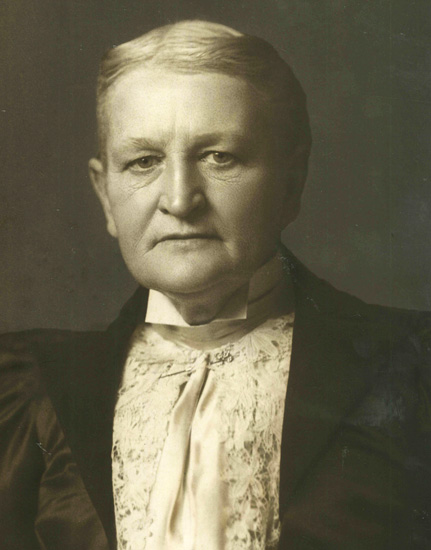
Dr. Leila G. Bedell
president Chicago Woman’s Club 1885 – ‘86
was elected The Lanier Club’s president in 1909

Early bookplate of the Lanier Club's village library.
Author's collection
In 1889 when Mrs Lanier was living in Tryon village and raising her two younger sons, neighbors Amelia Spence and Mrs. Thomas Knott, both from Kentucky, came for tea at the home of the three LeDuc sisters from Minnesota. Miss Mary LeDuc, a bibliophile and serious scholar, announced her ambitious goal to found a woman’s club in Tryon. Next day, it’s told, the five canvassed Tryon’s houses and hostelries to drum up support for the plan, calling a meeting held at The Laurels, a boarding house up the lane from Mrs. Lanier’s cottage. Thirty-eight women aged fourteen to seventy years attended, agreeing to form a club to meet once a week, their objective also to develop a village lending library.
When Mary Lanier was informed of the group’s desire to honor her husband by calling it The Lanier Club, she presented the nascent organization with two volumes of his work. These were the first books in The Tryon Library, which commenced with a single bookcase placed in the old Methodist church on Melrose Avenue, where the woman’s club’s early meetings were held. From the start, the book collection was intended for the community, not just for Club members.
Early Lanier Club leadership suggests the character of the nascent Tryon colony. Mary LeDuc served as first president. A graduate of Ohio Wesleyan College, she taught President McKinley in a one-room country school, and later wrote articles, some under the nom de plume “Kate Crayon,” on feminist themes. (Her influential brother William served as Commissioner of Agriculture during the administration of Rutherford Hayes, the president who after his term of office actively promoted the education and welfare of America’s black population, and whose son settled in nearby Asheville, North Carolina.)
Other officers included Miss Spence, Miss Belle McAboy from the resort hotel family and Miss Lily Wilcox, both from Pittsburgh. Mrs. Alexander Beatson was wife of a Scottish immigrant; they established one of the many commercial vineyards that gave the Tryon vicinity vistas more open than the heavily-wooded landscape today. Mrs. Charles Kenworthy was wife of a Philadelphia surgeon who lived for a while in Australia’s gold-mining district; they had lived in Jacksonville, Florida when a yellow fever epidemic struck the city.
Even before the club’s library project got really going, Mary LeDuc initiated a series of serious programs. The initial two woman’s club meetings focused on foreign news, with its very first program devoted to Mrs. Knott’s analysis of developments in Spain and Canada. By the third meeting on January 31, 1890 the programs assumed their pattern henceforth, where significant foreign and domestic news was analyzed, a lecture was delivered on some literary topic (Miss LeDuc explicating Robert Browning’s funeral, say, and the hymn of Mrs. Browning), and then for two hours attendees read aloud Julius Caesar. The event concluded with an accomplished musical presentation.
The Lanier Club became Tryon’s leading cultural force, organizing enriching public programs in addition to their own formal meetings with educational lectures, at a number of venues. For example William Gillette, the famous actor from Connecticut, maintained his winter home at Tryon, and was on close terms with Mary LeDuc and with Tryon painter Amelia Watson. A leader in the Nook Farm colony of creative intellectuals in Hartford, Gillette performed an evening’s entertainment impersonating his neighbor Mark Twain.

Mrs. Wilcox’s gravestone at Tryon Cemetery.
She read aloud his widow’s letter about Sidney Lanier
at the first meeting of the Lanier Club on January 16, 1890.
The club of educated women spearheaded civic improvements, among them establishing a town cemetery. The charming Markham Road cemetery is somewhat reminiscent of a New England burying ground, and contains the graves of many interesting people, a surprising number of whom were born abroad. After June of 1892, the Club discontinued its woman’s cultural meetings and for seven years focused on building up the village library.
During the “hiatus” of The Lanier Club in the mid-1890s, Mary Lanier from Tryon was invited to be guest of honor at a monthly “salon” of the Woman’s Literary Club of Baltimore. Founded by wealthy and influential Mrs. Lawrence Turnbull (in whose family plot Sidney Lanier is buried; Mary’s ashes were to be added to his) the Maryland club required its full members to be serious, published writers. It got started later the same year The Lanier Club began in Tryon. Francese Litchfield Turnbull was herself a poet. In 1890 she published in New York her first book, a novel featuring fictionalized Sidney Lanier as “Paul” and Mary Lanier as “Florence.” Mrs Turnbull anointed Mary an “honorary member” of the Baltimore club on the basis of her 1884 editing (with full credit) for Scribner’s of Sidney Lanier’s posthumous poetry volume, which had proved a remarkable literary success. Mrs Lanier’s 1895 trip to Baltimore was featured in the city’s daily newspaper; there members of the Literary Club honored her with verses composed in her honor. Not incidentally her much-publicized trip to Maryland brought attention to the new Tryon colony of writers and artists coalescing in the mountains of Western North Carolina.
In 1898 a new Tryon resident from New England, Miss Frances Wright, was elected president of the Club. She was instrumental in carrying forward the original vision. Meanwhile, Mary LeDuc had been appointed Tryon postmistress by her Ohio pupil, now President McKinley. The books were moved into a commercial building that also housed the post office. Miss Wright set about leading The Lanier Club to build its own permanent facility with a meeting room and a proper reading room. She pledged to pay for half the cost of a building lot, and serious fundraising began. The library collection expanded to 700 volumes by 1903. In 1904 the building burned down, and every book (including many valuable early autographed volumes) was destroyed.
This calamity inspired renewed effort. Help poured in from the community and many friends around America. In 1905 the Club formally incorporated. A building committee was appointed of three men and three women. William Strong, retired civil engineer and architect, designed the structure in shingled Arts & Crafts style.

Michael McCue in front of Lanier bust at Lanier Library,
photo by Harry Goodheart
The main room features a rustic fireplace, with niche above for a bust of Sidney Lanier. George Warner, brother of writer Charles Dudley Warner and brother-in-law of William Gillette, took charge of landscape architecture for the site, ideally situated near the train depot and across the street from Oak Hall Hotel. The first meeting held in Lanier Club’s own building took place December 21, 1905.

The new Lanier Club building on Chestnut Street, 1905
Soon a paid part-time librarian was hired and operations of the Club and its library became orderly and professionalized, thanks to the leadership of women with management experience. Notables visiting Tryon were amazed to find such a vigorous intellectual center, and they were often invited to participate in its affairs. John Burroughs the naturalist, for example, was a familiar figure in Tryon. Hans V. Kaltenborn, then editor of the Brooklyn Eagle, spent two winters in Tryon. The opera singer known as “Madame Talma” came often to visit her parents Dr. & Mrs. Henry Garrigues, a nationally-known gynecologist who had retired there from New York. Many prominent figures of the Progressive movement came to the village, such as the son of Jacob Riis; he was personally interested in protecting America’s forests and was attracted to the unspoiled woods of the Tryon vicinity.

Wynne was elected Lanier Club’s president in 1914.
The decision of Madeline Yale Wynne, an influential figure in American arts and literature, to make Tryon her winter home signaled the village had “arrived” as a magnet for the nation’s cultural leaders. She summered at Deerfield in Massachusetts and had a home as well in Chicago, where “The Little Room” club in its Fine Arts Building was named for Wynne’s most famous short story. The salon held at her Grady Avenue residence was noted for the cosmopolitanism of its guests.
When Harriet Monroe from Chicago, founder of Poetry magazine, wrote her autobiography, she didn’t bother to mention that Tryon is in North Carolina, undoubtedly presuming worldly readers would already know of it. Monroe’s own verses written at Tryon capture the idyllic spirit of the place, especially The Blue Ridge and April, North Carolina. The latter poem’s quatrains sing:
Would you not be in Tryon
Now that the spring is here,
When mocking-birds are praising
The fresh, the blossomy year?
Look—on the leafy carpet
Woven of winter’s browns
Iris and pink azaleas
Flutter their gaudy gowns.
The dogwood spreads white meshes—
So white and light and high—
To catch the drifting sunlight
Out of the cobalt sky.
The pointed beech and maple,
The pines, dark-tufted, tall,
Pattern with many colors
The mountain’s purple wall. . .
Miss Rachel Oliver arrived from Massachusetts to tutor the children of Charles and Emma Payne Erskine. (Charles was co-founder of the Case Equipment Company in Wisconsin; Emma was novelist “Payne Erskine” whose 1912 The Mountain Girl was a best-seller.) Oliver soon proved too strict and stern to fit the Erskines’s family tone, but she was hired as Lanier Librarian and managed it admirably. A series of other capable women later served as librarians. Fondly remembered is Miss Mary Carpenter, companion of prominent Lanier Club benefactor Helen Stearns, daughter of a Cleveland industrial magnate who developed Spring Mountain Park on White Oak Mountain. A petite hunchback with a droll sense of humor, Miss Carpenter was librarian from 1934 through 1948. In the spirit of Lanier’s founding as a female-initiated organization, no male has ever served as its Librarian.
Systematic cataloguing of the book collection commenced in 1926. Early ledgers paint an intriguing picture of reading habits and of Tryon’s web of connections to the wider cultural sphere. Lanier library contained a significant number of volumes in French. Numerous German-language books — popular as a many Tryonites were fluent in that language — were donated by patrons such as Hilda von Siller, Dr. Ann Angell, and Dr. Garrigues who was born in Denmark. Breadth of topics contributed by authors who donated their own books was remarkable. J.M.N. Broadhead donated Slav and Moslem. Naturalist Margaret Morley donated her books on the sciences. Charles Grafton, bishop of Fond du Lac and a leader of the Anglo-Catholic movement, donated Lineage of the American Catholic Church. Reverend S.P. Leeds, a professor at Dartmouth College, donated Christian Philosophy of Life. Lydia Avery Coonley Ward from Chicago, patroness of its Hull House and one of Tryon’s wealthiest and most well-connected winter sojourners, donated her Under the Pines and Other Verses. Josiah Strong, prominent Social Gospel philosopher, friend of many prominent American industrialists, and brother of William Strong, donated several of his own titles such as The Next Great Awakening.
When an author connected to the Tryon colony published a new work, it was bought for the collection or donated by a friend who belonged to the library. Mrs. C.D. Swan, for example, donated Ralph Waldo Trine’s Mystical Life of Ours. (Trine was a leader of the New Thought movement who sojourned in Tryon.) Mrs. Coffin, a club member, presented her deceased husband Charles C. Coffin’s Drumbeat of the Nation. (He was a Boston journalist, Southern war correspondent during the Civil War, whose books were mainly though not exclusively written for young people.) After her former employer’s death, Rachel Oliver donated Payne Erskine’s delightful small-press book of verse Harper and the King’s Horse. It’s also illuminating to observe titles donated by authors from their own collections, such as Erskine’s donation of Frank Stockton’s The Captain’s Toll-Gate, which treats similar themes and in tone rather reminiscent of Erskine’s own vigorous writing. George Warner donated Ignaz Goldziher’s Mythology Among the Hebrews. (Warner’s own book The Jewish Spectre is most unfortunately titled, for it is a well-reasoned study of discrimination against Jews, vigorously demolishing every old argument against Jewish character and integrity.)
Other titles reflect the reading tastes of early patrons. Playwright and actor William Gillette presented Pierre Loti’s Iceland Fisherman. Mrs. J.L. Daniels deposited Books of the Yale Pageant 1916. Tryon-born artist Lois Wilcox, then resident in New York, presented the catalogue of sculpture casts in Boston’s art museum, where she had studied. John Foster Searles, the New York architect who moved to Tryon and designed many of its most interesting early structures, donated Sir John Lubbock’s Pleasures of Life. It’s thus interesting to know that, after his wife’s death, Searles traveled the world extensively and finally settled in the idyllic tropical Seychelles isles. Lanier’s old catalogue ledgers even contain hints of humor; Marian B. Upton, prominent in the women’s suffrage movement, donated A.C. Benson’s The Upton Letters. It happens those tales of the English countryside have no connection to Tryon’s Mrs. Upton at all.
In the late 1920s the building was enlarged to accommodate the burgeoning book collection, despite efforts to keep shelves pruned. Records show that books were donated to the Negro School, actually wore out from constant use, or were simply “discarded.” Ledgers also reveal many books were never returned by borrowers; new titles were coming in so fast that it wasn’t considered a major problem. After World War II, Lanier’s building was expanded twice and the organization transitioned into focusing on its library as its central purpose; it became formally titled The Lanier Library. This membership library, open to anyone who wishes to belong, is one of just a couple dozen remaining in the United States. Cost of annual membership with borrowing privileges is modest.
The institution has never received any funding from government, and its leaders resisted proposals to transform Tryon’s library into a government-run facility. Elia Peattie, author and prominent early Lanier member, was most adamant in advocating its independence. During her years in Nebraska she was involved in establishing a public library collection funded by private donations, which later was turned over to the state. When subsequently the legislature failed to support the institution with sufficient resources, Peattie became soured on government as responsive to the needs of libraries. There was no government-funded library in Polk County at all until 1959 when Polk County Library was established in the county seat at Columbus.

Circa 1905 monumental Ivanhoe triptych by Chicago author and artist Lucy Fitch Perkins, lithographs with gouache, watercolors, and gold paint in period frame of fumed oak, depicting an event in Sir Walter Scott’s novel. Additional artworks installed during the past 120 years make Lanier Library the community’s athenaeum of historic visual arts.
When the Club building opened in 1905 it was rented for public music concerts, drama, and other community events, but by the Twenties the larger new Episcopal Parish House took over this role for the most part. Early on, the Lanier building also rented space for artists’ shows and also organized its own art exhibitions. These contemporary art activities ceased by the Fifties, but the organization has a collection of art and craft that’s interesting, reflecting the town’s history and tastes of its past members. For people just wanting to look, the library is open regular hours and welcomes the public to visit.
Michael McCue
July 2026